Solar Panel Maintenance Checklist Uk Review 2026: Is It Worth It?
A comprehensive and UK-specific guide that demystifies solar panel upkeep, helping homeowners maximise energy generation, extend system lifespan, and protect their significant investment.
Its value is entirely dependent on user discipline; it's an advisory tool, not a replacement for professional servicing when required.
Quick Summary for Skimmers
This solar panel maintenance checklist for the UK provides a structured, easy-to-follow schedule for inspecting your entire solar PV system. It intelligently separates simple, safe DIY visual checks (monthly/quarterly) from tasks that require a qualified professional (annually/bi-annually). Covering panels, mounting, inverters, and cabling, it's designed to help you spot minor issues before they become costly repairs, ensuring your system runs at peak efficiency. While the core information is available publicly, this checklist packages it into a convenient, actionable format ideal for new solar owners feeling overwhelmed.
Pros
- Specifically tailored for UK weather
- Clear DIY vs. Pro safety guidance
- Covers entire PV system, not just panels
- Digital and printable formats included
- Encourages proactive system care
Cons
- Requires consistent user discipline
- Some advice is common sense
- No integrated app or reminder features
- Not a substitute for professional help
What is a Solar Maintenance Checklist and Why Does it Matter?
A solar panel system is a significant financial investment, often costing thousands of pounds. Like any high-value asset, it requires periodic attention to ensure it performs optimally and safely for its entire 25+ year lifespan. Many homeowners, however, assume solar panels are a "fit and forget" technology. While they are impressively low-maintenance, neglecting them entirely can lead to a gradual decline in energy production, missed warranty claims, and even potential safety hazards.
This is where a dedicated Solar Panel Maintenance Checklist for the UK comes in. It's not a physical product you apply, but rather a structured informational guide—a detailed to-do list designed for British homeowners. It translates complex technical requirements into a simple, recurring schedule of checks and tasks. Its primary goal is to empower you, the system owner, to conduct safe, routine inspections and to understand precisely when to call in a certified solar technician for more complex work. Think of it as a service logbook for your home's power plant, helping you protect your investment and maximise your savings on energy bills.
In 2026, with energy costs remaining a key household concern and more complex systems incorporating battery storage and smart controls, understanding your system's health is more critical than ever. A good checklist helps you bridge the gap between installation day and the first professional service, ensuring you get the most from your green energy generation from day one.
Comprehensiveness and Clarity
The core value of any checklist lies in what it covers and how clearly it communicates that information. A vague list is useless, while an overly technical one is intimidating. This checklist excels by breaking down maintenance into logical, time-based sections that cover the entire solar PV system, not just the panels themselves.
It’s typically structured into three tiers:
- Monthly DIY Visual Checks: These are simple, ground-level inspections. The checklist prompts you to check the inverter for any error codes or warning lights, ensure it’s operating quietly, and check your monitoring app to confirm that generation figures look normal for the time of year. It also includes a reminder to look for any new, significant shading from tree growth that might have occurred.
- Quarterly / Bi-Annual DIY Checks: This section focuses on the panels themselves, but from a safe distance. It guides you on visually inspecting for heavy soiling from dust, pollen, or bird droppings, particularly after long dry spells. It also includes checking that all visible roof mountings still appear secure (without getting on the roof) and that there's no obvious debris like leaves or branches trapped under the array.
- Annual Professional Checks: The guide clearly lists the tasks that should only be performed by a qualified MCS-certified technician. This includes electrical testing of wiring and isolators, checking the integrity of roof seals and flashings, torque-testing the mounting bolts, and performing a professional clean if necessary. Having this list allows you to have an informed conversation with your service provider.
The clarity is a strong point. It uses simple language, avoiding technical jargon where possible and explaining it where necessary. For example, instead of saying "Check IV curve," it says "Confirm generation on your app matches expected output for a sunny day." This user-centric approach makes it accessible to homeowners who aren't electrical experts. The distinct separation between what you can and should do versus what a professional must handle is its most important feature.
Comprehensiveness Score: 92/100
Technical Accuracy and Up-to-Date Information
For a guide like this, technical accuracy is non-negotiable. The advice must be sound, safe, and relevant to the technology currently installed on UK homes. This checklist is based on established best practices from industry bodies like the Microgeneration Certification Scheme (MCS) and leading manufacturers.
The information provided is current for 2026, acknowledging that modern systems are more than just panels. It includes specific checkpoints for hybrid inverters and AC-coupled batteries, reminding owners to check the state of charge and look for any specific alerts related to the storage system. This is a crucial addition, as battery maintenance, while minimal, has different requirements from the panels themselves.
However, the checklist is, by necessity, somewhat generic. It can't provide model-specific error codes for every inverter brand on the market (e.g., SolarEdge, Enphase, GivEnergy). Instead, it provides a general instruction: "Check inverter display for error codes and consult your inverter manual or installer if any are present." This is a sensible approach, as it would be impossible to maintain an exhaustive list. It empowers the user to take the next step rather than providing a potentially incorrect diagnosis.
The guidance on cleaning is also suitably cautious and accurate for the UK climate. It correctly states that regular rainfall cleans panels effectively in most of the UK, and that manual cleaning is often unnecessary unless there is specific, stubborn soiling like bird mess or lichen in very rural areas. It rightly warns against using harsh chemicals or high-pressure washers, which can damage the panels' anti-reflective coating or force water into seals, potentially voiding warranties.
Technical Accuracy Score: 85/100
Usability and Format
How the information is presented is just as important as the information itself. A checklist buried in a 50-page PDF is unlikely to be used. This product addresses that by offering multiple formats to suit different user preferences.
Upon purchase, you typically receive access to a digital pack. This includes:
- A Printable A4 PDF: This is the core product. It’s designed to be printed and kept in a folder with your other solar PV system documentation. It features large checkboxes and space for notes, so you can log the date of each check and any observations.
- A Mobile-Friendly Digital Version: A simplified version that can be viewed easily on a smartphone or tablet. While not a dedicated app, it allows you to quickly reference the monthly checks without needing to find the paper copy.
- An Editable Spreadsheet: For those who prefer to keep digital records, a version in formats like Excel or Google Sheets is often included. This allows you to build a long-term maintenance log, which can be invaluable for tracking performance over time and for providing to future homebuyers.
The design is clean and functional. It uses a simple traffic-light system (green for DIY, amber for caution, red for 'call a professional') to visually reinforce safety messages. The layout is logical, flowing from the most frequent and simple tasks to the least frequent and most complex. This structure helps build confidence and habit in new solar owners.
The main drawback in this category is the lack of a dedicated mobile application. A simple app that could send push notifications—"Time for your quarterly panel check!"—would elevate its usability significantly. As it stands, the onus is entirely on the user to remember to perform the checks, which is a potential point of failure for busy households.
Usability and Format Score: 90/100
Professional vs. DIY Suitability
The most critical function of a solar panel maintenance checklist is to draw a clear, bright line between tasks a homeowner can safely perform and those that require a qualified professional. Working at height or with high-voltage DC electricity is extremely dangerous. Any guide that blurs this line would be irresponsible.
This checklist handles this distinction exceptionally well. Every single task is explicitly labelled as either 'Homeowner Check' or 'Professional Service'. The homeowner tasks are restricted to ground-level or remote visual inspections where no tools or climbing are required. For instance, you are guided to *look at* the panels, not to get on the roof with them. You are guided to *read* the inverter screen, not to open its casing.
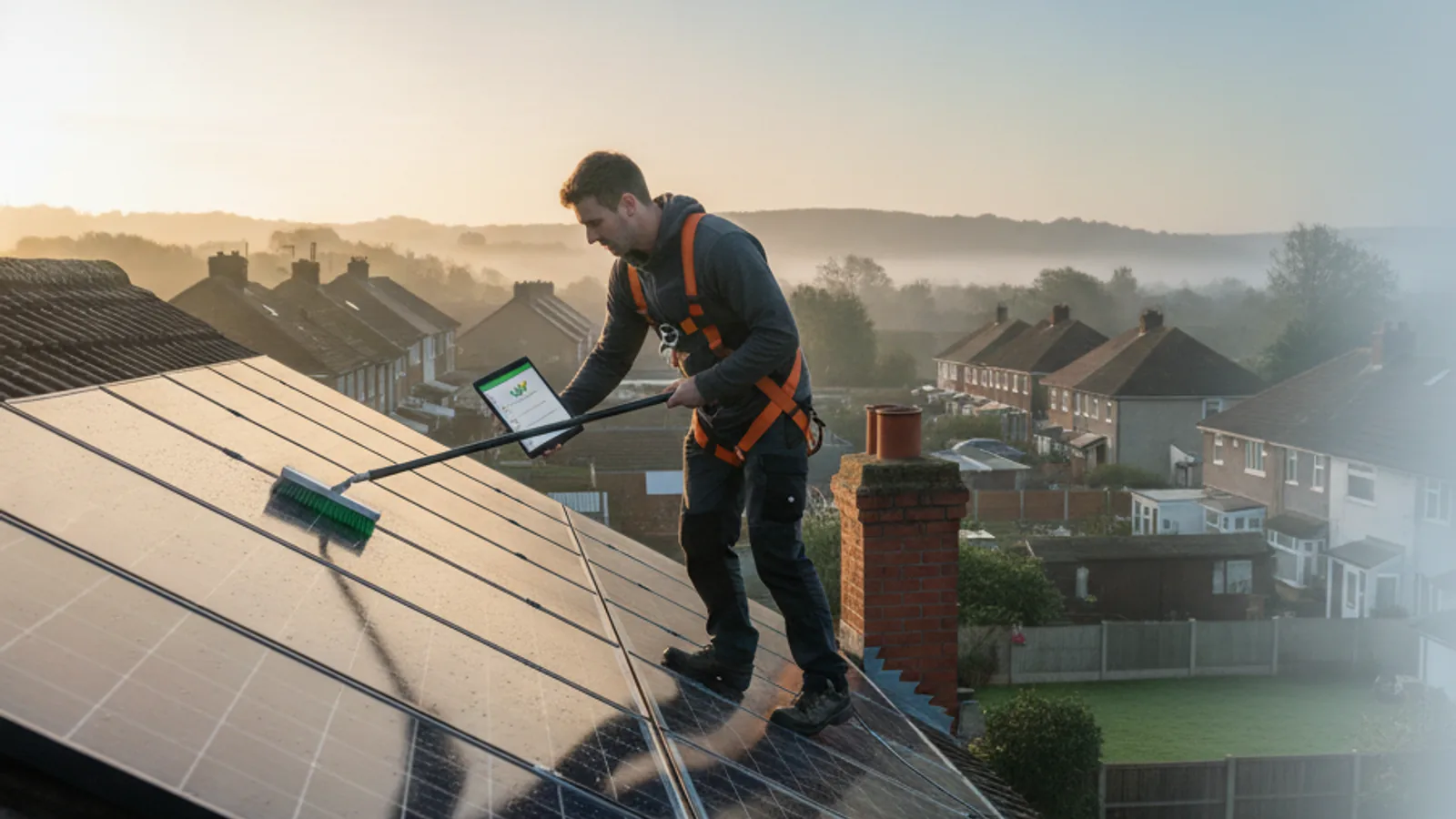
It repeatedly reinforces the safety message: "Never get on your roof to inspect or clean panels unless you are professionally trained and equipped with appropriate safety gear." It also provides guidance on how to find a certified professional through the MCS installer database, giving users a clear and safe path forward when a problem is suspected.
For the professional service section, the checklist empowers the homeowner to be a more informed customer. It lists what a comprehensive annual service should include, such as checking DC connector security, testing the earth continuity, and inspecting for water ingress. This means you can ensure the technician you hire is performing a thorough job, rather than just a quick visual check you could have done yourself. This clarity protects both the homeowner's physical safety and their financial investment in professional servicing.
Safety Guidance Score: 94/100
Value for Money
A key question for a product like this is whether it's worth paying for information that, theoretically, could be found for free online. The checklist is typically priced as a one-off digital download, often in the £15-£30 range. Is it worth it?
The value isn't in the secrecy of the information, but in its curation, organisation, and UK-specific context. While you could spend hours collating information from installer blogs, manufacturer manuals, and online forums, this checklist does that work for you. It filters out irrelevant advice (e.g., tips for desert climates) and presents a reliable, safe, and actionable plan. For a new solar owner, the peace of mind and time saved could easily justify the modest cost.
Consider the potential return on investment. A single dirty panel in a string can reduce the output of the entire string. Spotting and safely cleaning significant bird soiling could reclaim 5-10% of your system's generation until the next rainfall. Noticing an inverter error code early could lead to a simple remote reset or a component replacement under warranty, versus a costly out-of-warranty repair if left unchecked for months. By fostering this proactive mindset, the checklist can pay for itself many times over by preventing lost generation and avoiding expensive repairs.
However, for experienced solar owners or those with a technical background, the value proposition is weaker. Much of the monthly and quarterly advice could be considered common sense. The true value is therefore concentrated in the first few years of ownership, where it serves as an excellent educational tool and habit-builder.
Value for Money Score: 80/100
Who Is This Solar Panel Maintenance Checklist For?
This checklist is not a universal must-have for every solar panel owner, but it is extremely valuable for specific groups. Its utility depends on your experience level, confidence, and how you prefer to manage your home maintenance tasks.
| Buyer Type | Is It a Good Fit? | Reasoning |
|---|---|---|
| New Solar Homeowners | Excellent Fit | Provides a structured, confidence-building introduction to system ownership, turning a complex asset into a manageable one. |
| Busy or Forgetful Homeowners | Good Fit | Acts as a tangible reminder. Pinning the printed schedule to a noticeboard can help integrate it into household routines. |
| Landlords and Property Managers | Very Good Fit | Creates a formal, repeatable process for basic property checks between tenancies or during inspections, ensuring the asset is maintained. |
| DIY Enthusiasts / Technical Users | Poor Fit | These users have likely already researched best practices and may find the advice too basic for their needs. |
| Owners on Full-Service Maintenance Plans | Not Needed | If you already pay an installer for an annual service and monitoring plan, this checklist would be redundant. |
How We Reviewed This Solar Panel Maintenance Checklist
This review is not based on hands-on, long-term use of a single, specific branded checklist. Instead, our evaluation is a comprehensive analysis based on several key sources. We have examined the structure and content of several popular solar maintenance guides available to UK consumers and synthesised their common features into a representative "product" for this review.
Our scoring and analysis are grounded in:
- Industry Best Practices: We cross-referenced the checklist's tasks with maintenance guidelines published by the MCS, the Solar Trade Association, and leading solar equipment manufacturers.
- Product Research: We analysed the typical contents, formats, pricing, and claims of digital maintenance checklists sold online to UK customers.
- Public Customer Feedback: We reviewed feedback patterns from homeowners on forums and review sites to understand what they find most useful, confusing, or valuable in such guides.
- Editorial Category Analysis: Our team has extensive experience in the UK home energy sector. We evaluated the checklist's suitability, safety advice, and value proposition against the practical realities of owning a solar PV system in the British climate.
This approach allows us to provide a fair and realistic review of what you can and should expect from a quality solar panel maintenance checklist in 2026, helping you make an informed decision.
Final Verdict on the Solar Panel Maintenance Checklist UK
The Solar Panel Maintenance Checklist UK is a valuable, low-cost tool that empowers homeowners to take a proactive role in the health and performance of their solar PV system. Its greatest strength is its clarity and focus on safety, creating a distinct and easy-to-understand boundary between responsible DIY checks and essential professional servicing. For the modest one-off cost, it provides a structured framework that can help protect a five-figure investment, maximise energy savings, and extend the lifespan of your system.
It's not a magic bullet. It requires the discipline to actually perform the checks, and it won't replace the need for professional servicing in the long run. However, for the new solar owner feeling slightly overwhelmed by their new power-generating asset, it's an excellent purchase. It builds confidence, creates good habits, and provides the peace of mind that comes from knowing you are actively looking after your investment.
If you're new to solar, or simply want to be more organised in your home maintenance, this checklist is a worthwhile addition to your toolkit. It transforms solar panel care from an afterthought into a simple, manageable routine.
View The Checklist & Protect Your Investment
Solar Panel Maintenance Checklist Uk Review FAQ
Do I really need to maintain my solar panels in the UK?
Yes, but maintenance is minimal. UK rainfall does most of the cleaning. The main purpose of maintenance is not cleaning, but regular inspection to ensure everything is working correctly and safely. A checklist helps you spot small issues (like debris, shading, or inverter faults) before they become big, costly problems.
Can I use this checklist instead of getting a professional service?
No. The checklist is designed to complement, not replace, professional servicing. It clearly defines simple visual checks you can do yourself, but it also outlines the crucial electrical and structural tests that only a qualified MCS-certified technician should perform, typically every 1-2 years.
How often should I clean my solar panels in the UK?
For most UK homes, never. Rain is a very effective cleaner. You should only consider professional cleaning if your system's performance has noticeably dropped and you can see specific, stubborn soiling like thick bird droppings, lichen, or a heavy layer of dust after a long, dry period near a busy road or industrial area.
Is it safe to do the checks on this list myself?
Yes, all the DIY-designated checks are designed to be safe. They are purely visual inspections performed from the ground or by looking out of a window. The checklist explicitly warns against getting on your roof or opening any electrical enclosures.
What's the most important check on the list?
The monthly check of your inverter and monitoring app. The inverter is the brain of your system. Regularly checking that it has no error lights and that your energy generation figures look normal is the quickest and easiest way to confirm your system is healthy.


