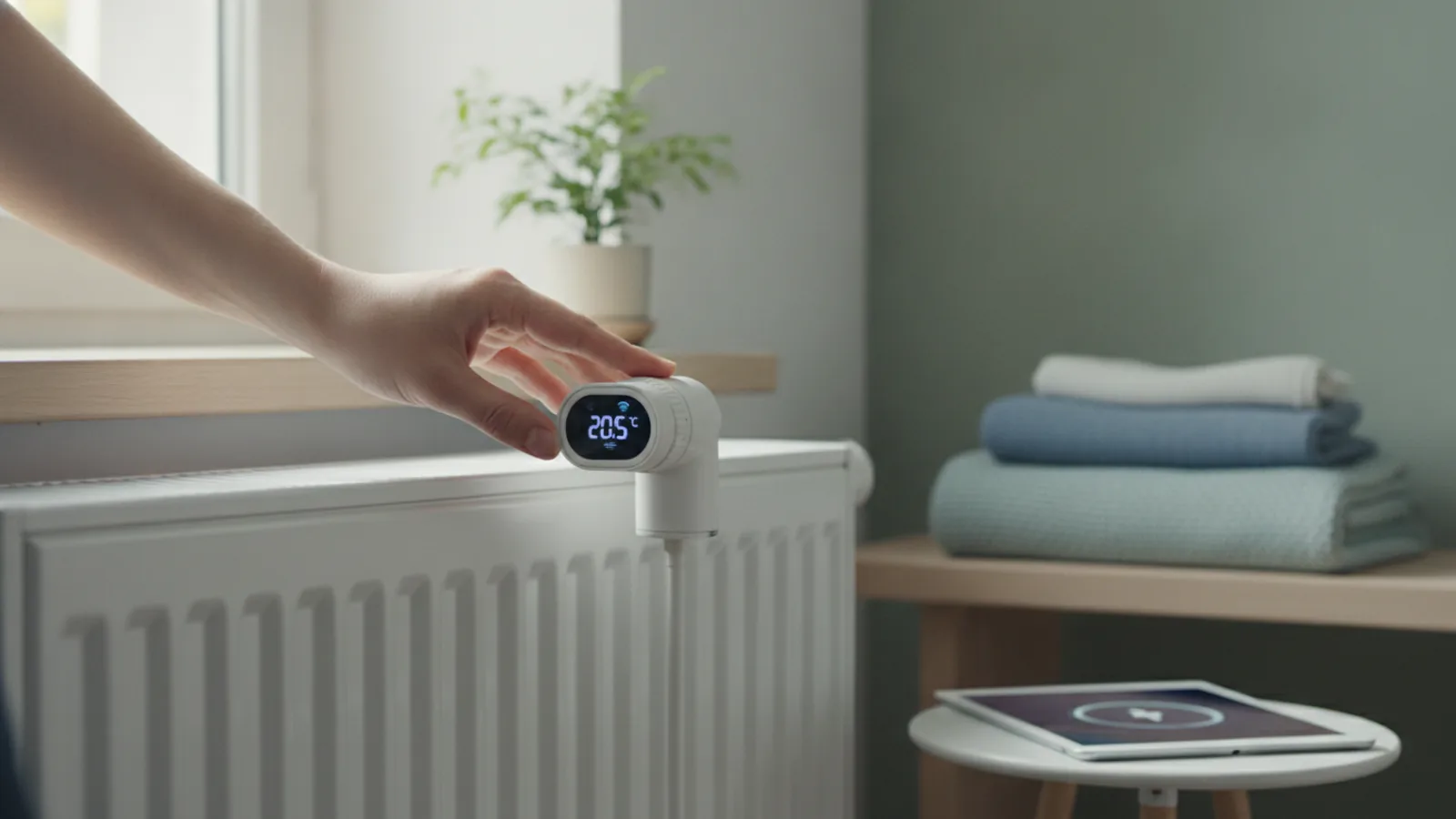
Smart Radiator Valves Explained
Smart radiator valves are a powerful upgrade for your home heating, allowing you to control the temperature of individual rooms from your phone. This technology helps you stop heating empty spaces, significantly cutting your energy bills and reducing your home's carbon footprint. This guide explains exactly what they are, how they work in a typical UK home, and the key compatibility checks you need to make. We'll walk through the concepts of zoned heating, system components, and how to assess if they are the right eco-friendly investment for you.
Fast Answer
- What they do: Control individual radiators via a smartphone app.
- Main benefit: Cut energy waste by only heating the rooms you're using.
- How they work: They replace existing TRV heads and obey a central smart thermostat.
Before You Start
- Identify your current valves: Check if your radiators have modern Thermostatic Radiator Valves (TRVs) with a numbered dial, or older manual 'on/off' taps. Smart valves are a simple swap for TRVs but require plumbing work for manual valves.
- Assess your home's layout: Think about which rooms are frequently empty. The more rooms you can turn down, the greater your potential savings.
- Know your heating system: Understand if you have a combi, system, or regular boiler. While smart valves work with most systems, their interaction with the main thermostat is key.
- Check your Wi-Fi signal: Smart heating systems rely on a stable internet connection, so ensure you have good coverage throughout your home.
Step-by-Step Instructions
Understand Your Current Radiator Valves
Before you can appreciate what makes a smart valve 'smart', it's helpful to know what you likely have now. Most modern UK homes with central heating have one of two types of valves on their radiators.
A manual valve is a simple tap, usually with a cap that you turn to either 'on' or 'off'. It has no intelligence; it just controls the flow of hot water. If the heating is on, a radiator with an open manual valve will get hot until the entire house reaches the temperature set on your main thermostat. These are common in older properties.
A Thermostatic Radiator Valve (TRV) is a more advanced manual control. It has a numbered dial, typically from 1 to 5. Inside the head is a small pin connected to a capsule of wax or liquid. As the room warms up, the substance in the capsule expands, pushing the pin down to close the valve and restrict hot water flow. As the room cools, it contracts, allowing the valve to open again. This gives you basic room-level temperature control, but it's not 'smart'—it can't be scheduled or controlled remotely.
Grasp How Smart Radiator Valves Work
A smart radiator valve (SRV) takes the concept of a TRV and adds digital intelligence and connectivity. The plastic head of the old TRV is replaced with a battery-powered electronic actuator. Inside this smart head is a small motor that physically moves the valve pin up and down, just as the expanding wax did in the old TRV.
The key difference is what tells the motor to move. Instead of reacting to the ambient temperature alone, the SRV contains a digital thermometer and a wireless radio. It 'listens' for commands from a central smart thermostat or a 'bridge' device connected to your Wi-Fi router. You send these commands from an app on your smartphone.
This setup unlocks a range of powerful features:
- Remote Control: Adjust the temperature of any room from anywhere you have an internet connection.
- Detailed Scheduling: Set unique heating schedules for every single room. For example, have the bedroom warm up just before you wake, the office warm during the day, and the living room cosy in the evening.
- Open-Window Detection: Many SRVs can detect a sudden drop in temperature (like when a window is opened) and will temporarily shut the radiator off to avoid wasting energy.
- Geolocation: The system can use your phone's location to automatically turn the heating down when the last person leaves the house and turn it back on as the first person approaches home.
Learn About "Zoning" Your Home for Efficiency
The single biggest benefit of smart radiator valves is the ability to create heating 'zones'. A traditional central heating system is an all-or-nothing affair. When the thermostat tells the boiler to turn on, every radiator in the house gets hot (unless you've manually turned its TRV down).
This is incredibly inefficient. Why pay to heat your spare bedroom, dining room, and home office to 20°C on a Saturday evening when everyone is in the living room? Zoning solves this problem. With an SRV on each radiator, you can treat each room as its own independent zone.
Imagine this scenario:
- Morning (7am-8am): Only the kitchen and bathroom radiators are active.
- Day (9am-5pm): The home office is kept at 21°C, while the rest of the house drops to a low 'background' temperature of 16°C.
- Evening (6pm-10pm): The living room and kids' bedrooms are heated. The office is now off.
- Night (11pm onwards): All rooms are off or at a very low frost-protection temperature, except the main bedroom which is set to a comfortable 18°C.
This granular control ensures you're only ever using gas to heat the spaces you are actually occupying. This is where the major cost and carbon savings come from. According to the Energy Saving Trust, a full set of smart heating controls could save a typical UK household hundreds of pounds per year.
Understand the Complete System Components
Smart radiator valves are part of a team; they cannot work alone. It's crucial to understand how the different parts of the system interact to avoid confusion. A typical setup includes four main components.
- The Smart Radiator Valves (SRVs): These are the individual units fitted to each radiator. They control the flow of water to that specific radiator. They can report the current room temperature but cannot turn the boiler on or off by themselves.
- The Smart Thermostat: This is the 'brain' of the system. It usually replaces your existing wall thermostat. When any single SRV in the house decides it needs heat (based on your schedule), it sends a wireless signal to the Smart Thermostat. The thermostat then sends the command to the boiler to fire up.
- The Bridge (or Hub): This small box plugs into your Wi-Fi router. It acts as a translator, allowing the SRVs (which often use a low-power wireless protocol like Zigbee) to communicate with your home network and the internet. This is what enables you to control the system from your phone when you're away from home.
- The Smartphone App: This is your control panel. You use the app to set schedules, adjust temperatures, view heating history, and configure all the settings for your valves and thermostat.
The key takeaway is this: an SRV calls for heat, but the smart thermostat is what tells the boiler to provide it. This is why you cannot simply buy a smart radiator valve and expect it to work without the corresponding smart thermostat and bridge from the same brand.
Assess Compatibility and Installation Basics
The good news is that most smart radiator valves are designed for easy DIY installation, provided you're replacing an existing TRV. The process usually involves unscrewing the old TRV head (no tools needed) and screwing on the new smart one. Since you are not touching the plumbing or the valve body itself, there's no need to drain the system and no risk of leaks.
However, compatibility is king. The main thing to check is the fitting on your existing TRV body. The most common size in the UK and Europe is M30 x 1.5mm. Most SRV kits are designed for this size and come with a range of plastic adapters to fit other, less common valve bodies (like Danfoss RA, RAV, RAVL). Before buying, it's wise to unscrew one of your TRV heads and check the fitting.
The major hurdle is if you have old manual valves. In this case, you cannot simply swap the head. A qualified plumber will need to drain your central heating system, remove the entire old manual valve, and fit a modern TRV body. Once that's done, you can then fit the smart head yourself. This adds cost and complexity, so it's essential to factor this into your budget if needed.
Quick Reference
| Situation | Is It a Good Fit? | Why |
|---|---|---|
| You live in a large house with several unused rooms. | Excellent fit | Maximum potential for savings by creating zones and not heating empty spaces. |
| You live in a small, open-plan flat. | Consider the cost | Fewer zones to control means savings will be much smaller. A smart thermostat alone may be more cost-effective. |
| Your family has very different schedules and temperature preferences. | Excellent fit | Allows for personalised comfort in each room, improving comfort and reducing arguments over the main thermostat setting. |
| You work from home in one specific room all day. | Very good fit | You can heat just your home office during working hours, saving a significant amount compared to heating the whole house. |
| You have underfloor heating. | Not suitable | These devices are only for wet central heating systems with radiators. Underfloor heating requires a different type of smart controller. |
Common Problems and Misconceptions
While smart radiator valves are brilliant, some aspects can be confusing at first. Here are some common queries and how to understand them.
- "My boiler seems to be turning on and off more often."
This can be normal. If only one small bedroom radiator is calling for heat, the boiler will fire up to serve it. The water in the system heats up quickly, the room reaches its target temperature, and the boiler turns off. While it might seem inefficient, it's still using far less gas than heating the entire house for that one room. - "A radiator is cold even though the heating is on."
This is the system working as intended! If a room is already at its target temperature, or if its schedule has it turned 'off', the smart valve will keep it closed. The radiator will only get hot when the app tells it to. - "The valve in the app says it's 'calling for heat' but the boiler isn't on."
Remember the chain of command. The valve tells the smart thermostat it needs heat. The smart thermostat then tells the boiler to fire. There can be a short delay. Also, check that the main smart thermostat itself has power and is properly connected to the boiler controller. - "The batteries died and now it doesn't work."
SRVs are battery-powered, typically using AA batteries that last for 1-2 years. The app will always give you plenty of warning when the batteries are low. It's a good idea to have a spare set on hand. If they die completely, the valve will usually fail to a partially open state to provide some frost protection.
Advanced Tips for Maximising Savings
Once your system is up and running, you can fine-tune it for even greater efficiency and comfort.
- Analyse Your Heating Graphs: Most smart heating apps provide detailed graphs showing when each room called for heat and how quickly it warmed up. After a few weeks, review this data. You might find a room heats up much faster than you thought, allowing you to shorten its schedule and save energy.
- Fine-Tune Geofencing: If you use geolocation, check the radius setting. If you live in a town, a small radius might mean the heating only comes on when you're on your street. A larger radius might be better if you have a longer drive home from the motorway, giving the house time to warm up.
- Use Temperature Offsets: If you find an SRV consistently reports a temperature that feels slightly off (perhaps it's in a cold corner or behind a sofa), most apps allow you to set a temperature offset (e.g., +1°C) to compensate and improve accuracy.
- Balance Your Radiators: This is a more traditional plumbing task, but it helps smart systems work better. 'Balancing' involves adjusting the lockshield valve on the other end of your radiators to ensure they all heat up at a similar rate. It stops one radiator from getting scorching hot while another is still lukewarm, leading to more efficient heating cycles.
Smart Radiator Valves Explained: Your Questions Answered
| Do I need a smart radiator valve on every single radiator? | No, it's not mandatory. You can start by fitting them in the rooms you use most to create basic zones. However, for the biggest savings and most granular control, fitting them to every radiator is the ultimate goal. Most experts advise leaving one radiator (e.g., a towel rail in a bathroom) without a TRV of any kind to act as a system bypass. |
|---|---|
| How are the valves powered and how long do they last? | They are almost always powered by standard AA or AAA batteries. A set of good quality alkaline batteries will typically last between 18 and 24 months. The app gives you low-battery warnings well in advance. |
| Can I really install them myself? | Yes, if you are replacing existing TRV heads. It's a tool-free job that takes about five minutes per radiator. If you have old manual valves, you will need a plumber to replace the entire valve body first, which is a more involved task. |
| Do they work with my old boiler? | Yes, the system is compatible with almost all wet central heating systems, regardless of the boiler's age or type (combi, system, heat-only). The smart part of the system talks to the boiler's controls, not the boiler itself, so compatibility is rarely an issue. |
| What happens if my Wi-Fi goes down? | Your heating won't just stop. The system is designed to be resilient. The valves and thermostat will continue to run on their last saved schedule. You will lose the ability to control it from your phone, but you can usually still adjust the temperature manually on the valve head itself until the connection is restored. |
Final Checklist: Are Smart Radiator Valves Right for You?
- Confirm you have thermostatic radiator valves (TRVs) on most of your radiators for an easy DIY upgrade.
- Identify at least 2-3 rooms or zones in your home with different heating needs (e.g., office, living room, spare room).
- Choose a single brand for your smart thermostat and valves to ensure they communicate perfectly.
- Calculate the upfront cost against the potential long-term savings on your energy bills.
- Verify you have a stable and reliable home Wi-Fi network that covers your whole property.
- Budget for a plumber if you have old manual valves that need replacing before you can fit the smart heads.
- Consider your lifestyle—if your schedule is irregular or you often forget to turn the heating down, the automation will be highly beneficial.


