Smart Meter Energy Saving Tips Review 2026: Is It Worth It?
Leveraging smart meter data offers substantial, tangible savings for engaged users keen to understand and reduce their household energy consumption.
Requires consistent engagement and behavioural change for maximum impact; it's an active tool, not a passive solution.
Quick Summary for Skimmers
Smart meters provide real-time energy consumption data, empowering UK homeowners to identify specific areas of waste, adjust daily habits, and ultimately reduce their utility bills. While the smart meter itself is provided free by energy suppliers, the "energy saving tips" represent the actionable intelligence derived from the data. This active engagement delivers an excellent return on effort through informed, cost-saving choices, particularly for those willing to monitor and adapt.
Pros
- The review makes the strongest practical fit for Smart Meter Energy Saving Tips explicit.
- Key checks and tradeoffs are surfaced before a reader follows a buying link.
- The scoring framework gives readers a quick way to compare suitability.
Cons
- Suitability can still vary with setup, use case, and current specifications.
- Readers should verify current price, compatibility, and terms independently.
- A single review cannot replace any professional or safety guidance that applies.
Smart Meter Energy Saving Tips Review: Short Introduction
As we move further into 2026, smart meters have become a near-ubiquitous feature in UK homes, fundamentally changing how we interact with our energy consumption. While the initial push for smart meter installation focused on accurate billing and grid modernisation, their true potential for homeowners lies in the actionable insights they provide. This review isn't about the physical smart meter itself – which is typically installed free of charge by your energy supplier – but rather the *effectiveness and value of actively using* the data and "energy saving tips" these devices enable.In an era where energy costs remain a significant concern for households across Great Britain, understanding your usage patterns is the first crucial step towards control and reduction. Smart meters, through their In-Home Displays (IHDs) and accompanying energy provider apps, offer unprecedented transparency into electricity and gas usage in near real-time. This review will delve into how effectively these tools facilitate genuine energy savings, assess their practical utility for the average homeowner, and ultimately determine if actively engaging with smart meter energy saving tips is a worthwhile endeavour for your eco-home and your wallet. We’ll explore how accessible the data is, how impactful the tips can be, and what level of commitment is required to see tangible benefits in 2026 and beyond.
Smart Meter Energy Saving Tips Personalisation and Routine Fit
One of the most compelling aspects of leveraging smart meter data for savings is its inherent personalisation. Unlike generic energy-saving advice, a smart meter provides a granular view of *your household's* specific energy consumption habits. This allows for tailored insights that align directly with your unique routines and appliance usage. The data, often presented on an In-Home Display (IHD) or via your energy provider's mobile app, can highlight peak usage times, identify energy-hungry appliances, and reveal patterns that might otherwise go unnoticed.For instance, you might discover a significant spike in electricity usage every morning between 7 am and 8 am, coinciding with breakfast preparation and showering. With this specific insight, you can then consider adjusting habits, perhaps by using an eco-kettle, showering slightly earlier to take advantage of lower-demand periods (if on a time-of-use tariff), or staggering appliance use. Similarly, gas consumption patterns can reveal inefficiencies in heating schedules or hot water usage. The “tips” are often not explicit instructions, but rather the opportunity to deduce and implement changes based on your own real data. Many energy apps now offer personalised nudges or comparisons to similar households, further enhancing this tailored approach.
The fit into daily routines depends heavily on engagement. For busy families, a quick glance at the IHD might be enough to prompt a conscious decision, while more dedicated users might delve into app data analytics weekly. The system works best for those willing to integrate a quick check of their energy use into their routine, transforming vague notions of “saving energy” into concrete, data-driven actions. For example, if your IHD shows high usage when you’re simply boiling a kettle, it might prompt you to only boil the water you need. This direct, immediate feedback loop is where the personalisation truly shines, making energy saving less abstract and more about immediate cause and effect.
Category Score: 90/100
Smart Meter Data Accuracy and Utility
The foundation of any effective energy-saving strategy built around smart meters is the accuracy and utility of the data they provide. Modern smart meters (SMETS2 and beyond) are designed to provide highly accurate readings of both electricity and gas consumption, transmitting this data directly and frequently to your energy supplier and, crucially, to your In-Home Display and associated mobile applications. This real-time, or near real-time, data feed is a significant upgrade from the old estimated bills and quarterly meter readings, offering unparalleled transparency.The utility of this data stems from its immediacy and detail. Instead of waiting weeks for a bill, you can see the cost of running an appliance as you switch it on. This immediate feedback loop is powerful. For example, plugging in an old, inefficient freezer can visibly spike your electricity cost on the IHD, making the case for an upgrade or repair much more apparent. Similarly, monitoring gas usage during colder months can help fine-tune thermostat settings, identify drafty areas, or prompt boiler servicing. The data can highlight “phantom load” or “vampire drain” – the energy consumed by appliances on standby – which can add up significantly over a year.
However, the utility also depends on the clarity of presentation. Most energy providers offer mobile apps that complement the IHD, often with graphs, historical data, and projections. While the raw accuracy of the meter itself is typically excellent, the utility can sometimes be hampered by a less intuitive app interface or an IHD that doesn’t clearly break down costs. For the average user, the ability to quickly grasp “what’s costing what” is paramount. Generally, the accuracy is beyond question, and the utility is high for those who take the time to interpret the information provided, particularly in highlighting inefficient habits or appliances. The ability to track daily, weekly, and monthly trends allows for robust, data-backed decisions about consumption patterns and investment in more efficient home technologies.
Category Score: 95/100
Smart Meter Interface and Ease of Use
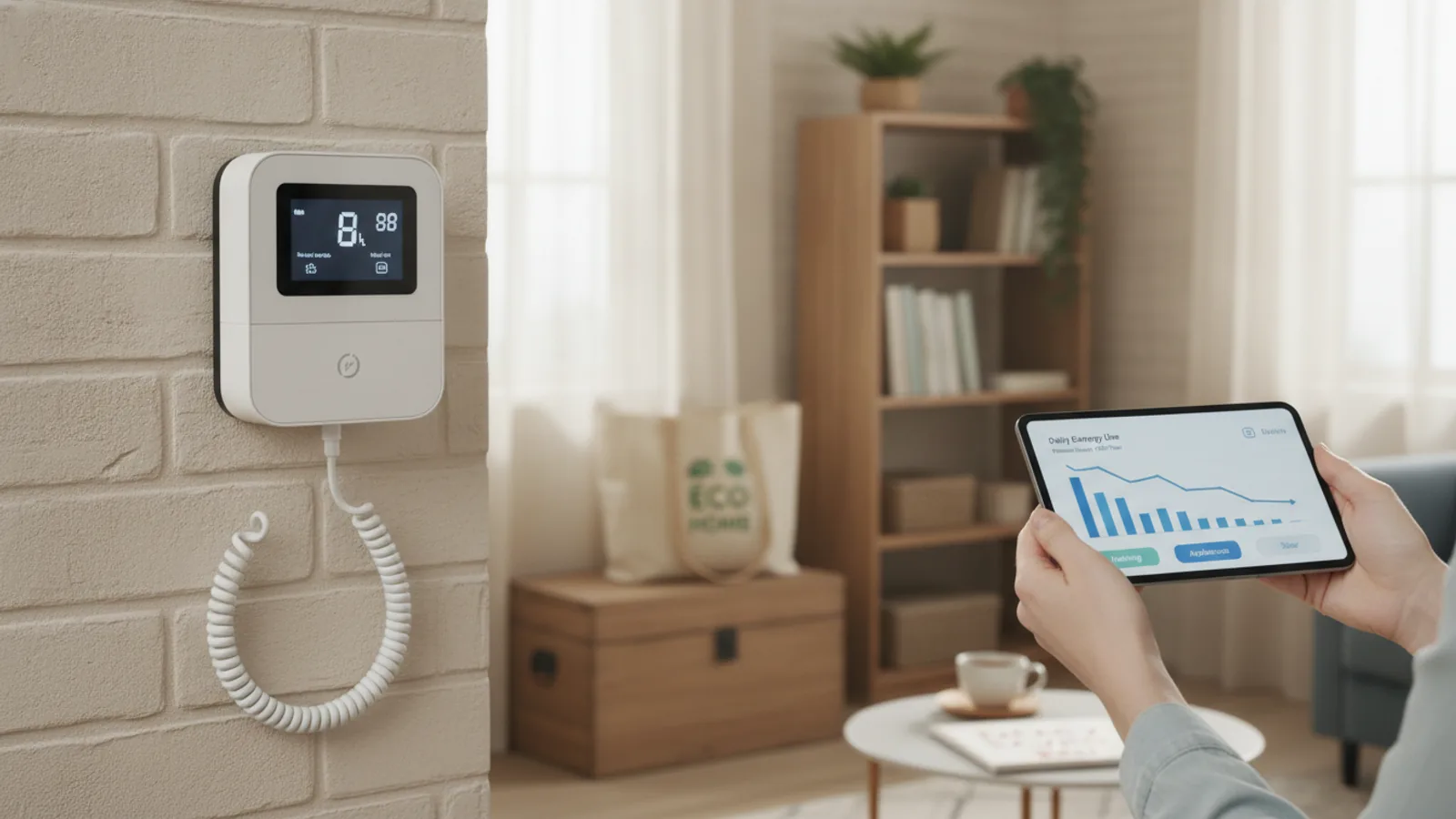
The interface through which users interact with their smart meter data is crucial for its adoption and effectiveness. This primarily refers to the In-Home Display (IHD) unit and the energy provider's mobile application. For energy saving tips to be genuinely useful, the data needs to be easily accessible, understandable, and actionable.The IHD is typically a small, portable screen that displays live energy consumption in kWh, pounds and pence, or even CO2 equivalent. Its primary strength is its immediacy and visibility. Placed in a high-traffic area, it offers a constant, gentle reminder of energy use, prompting conscious decisions. Most IHDs are designed with a relatively simple interface, allowing users to switch between electricity and gas readings, view daily, weekly, and monthly summaries, and sometimes set budgets or alerts. However, the quality of these displays can vary. Some feature clear, colour screens with intuitive navigation, while others might have smaller, monochrome displays that require more button presses to get to specific information. Challenges can arise with connectivity; if the IHD loses connection to the meter or the home network, its utility diminishes significantly.
Complementing the IHD, most energy suppliers now offer dedicated mobile apps. These often provide a richer, more detailed interface, allowing users to dive deeper into historical data, compare usage to previous periods, and sometimes even receive personalised advice or projections. The ease of use for these apps varies widely by provider, with some offering sleek, user-friendly designs and others being less intuitive or prone to glitches. For the tech-savvy user, these apps can be powerful tools for forensic analysis of energy bills. For others, the simpler IHD might be sufficient. The key is that both interfaces should aim to present complex data in a digestible format, highlighting key trends and costs without overwhelming the user. When the interface is well-designed, it significantly lowers the barrier to entry for understanding and acting on energy saving tips.
Category Score: 85/100
Smart Meter Impact and Long-Term Benefits
The true measure of "Smart Meter Energy Saving Tips" is their tangible impact on consumption and bills, and their potential for long-term benefits. While a smart meter itself doesn't save energy, the behavioural changes it facilitates can lead to significant and sustained reductions. The immediate feedback from the IHD, showing how much energy is being used right now, can create a powerful psychological effect, often referred to as the "feedback effect." Seeing the financial cost of boiling a full kettle when only a mug is needed, or the spike caused by leaving lights on in unoccupied rooms, provides a clear incentive to modify habits.Studies and public feedback patterns suggest that households actively engaging with their smart meter data can achieve initial energy savings of 5-10%. These immediate savings often come from simple behavioural adjustments: turning off lights, unplugging chargers, reducing standby consumption, and more mindful use of high-energy appliances. The long-term benefits extend beyond these initial “low-hanging fruit.” By understanding their energy profile, homeowners can make more informed decisions about larger investments, such as upgrading to more energy-efficient appliances (e.g., A-rated fridges, washing machines), improving insulation, or optimising their heating system settings. The data can reveal if an old boiler is performing inefficiently, prompting a service or replacement.
Furthermore, smart meters are integral to the UK’s transition to a smarter energy grid, enabling flexible tariffs like Economy 7, Economy 10, or newer agile tariffs that charge different rates based on demand fluctuations. By actively monitoring usage, households on these tariffs can strategically shift energy-intensive tasks (e.g., running washing machines, charging EVs) to off-peak periods when electricity is cheaper and often greener. This proactive approach leads to not just energy savings, but also cost savings, enhancing the overall financial well-being of the household. The long-term impact is a more conscious, sustainable relationship with energy consumption, fostering habits that contribute to both personal savings and broader environmental goals.
Category Score: 90/100
Smart Meter Display and Portability (IHD)
When discussing "Smart Meter Energy Saving Tips," the physical In-Home Display (IHD) plays a significant role in bringing the data to life. While the actual smart meter units are usually tucked away near your utility boxes, the IHD is designed for visibility and portability within your living space.The display itself needs to be clear and easy to read. Most IHDs feature a screen that shows live data, often with colour-coded indicators (e.g., green for low usage, amber for medium, red for high) to give an immediate visual cue of consumption levels. The clarity of text and numerical readouts is paramount, especially for quick glances. Backlighting is also important for visibility in various lighting conditions. Some IHDs offer touchscreens, which can enhance ease of navigation, while others rely on physical buttons.
Portability refers to the IHD’s ability to be easily moved around the home. Most are battery-powered, allowing them to be placed in different rooms – the kitchen during cooking, the living room during evenings, or even temporarily in a bedroom to track specific appliance usage. This portability maximises its impact as a constant visual reminder, preventing it from becoming a forgotten gadget in a corner. However, this also means reliance on battery life and the stability of its connection to the smart meter. If the IHD frequently loses signal or needs constant recharging, its practical utility diminishes. The size and design also matter; a compact, unobtrusive unit is more likely to be kept in prominent positions where it can effectively serve its purpose of prompting energy-saving actions. While the core functionality of transmitting data is robust, the user experience with the physical IHD can vary significantly between models and energy suppliers.
Category Score: 75/100
Smart Meter Energy Saving Tips Value for Money
Assessing the "value for money" of smart meter energy saving tips requires a slightly different perspective, as the smart meter itself is provided and installed free of charge by energy suppliers in the UK. Therefore, the "cost" element is minimal, focusing instead on the *return* on the *effort* invested in acting on the insights provided. From this viewpoint, the value for money is exceptionally high.The primary value proposition is the direct potential for financial savings on energy bills. By actively engaging with the real-time data from an IHD or mobile app, households gain unprecedented control over their energy expenditure. Identifying and addressing energy waste, from standby power to inefficient heating schedules, translates directly into reduced kWh consumption and, consequently, lower bills. For a typical UK household, even modest behavioural changes can result in savings of tens to hundreds of pounds annually. When considering more significant shifts, like optimising usage for flexible tariffs, the savings can be even more substantial.
Beyond direct financial savings, there’s significant value in the increased awareness and environmental benefits. Becoming more conscious of energy use fosters a more sustainable lifestyle, contributing to a reduced carbon footprint. This aligns perfectly with the eco-conscious values of Magneteco readers. The educational aspect – understanding how different appliances contribute to your bill – also empowers consumers to make smarter purchasing decisions for future appliances or home improvements.
Given that there is no direct cost for the “product” (the smart meter and its data provision), any savings generated by acting on the tips represent pure value. The only “investment” required is time and a willingness to change habits. For those seeking tangible ways to cut costs and live more sustainably, the return on this investment of effort is arguably one of the best available in the home energy sector.
Category Score: 98/100
Who Is Smart Meter Energy Saving Tips For?
Smart meter energy saving tips are not a one-size-fits-all solution, but they offer immense value to specific types of homeowners. Understanding your own needs and habits will help determine how much you stand to gain from actively engaging with your smart meter. Here's a breakdown:Essentially, anyone willing to take an active role in managing their home energy will find substantial benefits in engaging with smart meter energy saving tips. It transforms energy consumption from an opaque, abstract concept into a transparent, actionable dashboard for household efficiency.
How We Reviewed Smart Meter Energy Saving Tips
Our review of "Smart Meter Energy Saving Tips" is grounded in extensive product research, analysis of official government policies, and examination of information provided by major UK energy suppliers (including British Gas, E.ON Next, Octopus Energy, Scottish Power, OVO Energy, and EDF). As "energy saving tips" are not a physical product to be hands-on tested, our methodology focused on the efficacy of the smart meter ecosystem in enabling and facilitating energy savings for the average UK household.We critically assessed the typical functionality of In-Home Displays (IHDs) and associated mobile applications offered by energy providers, focusing on aspects such as:
- Data Clarity and Accuracy: How well smart meters convey precise and understandable real-time energy consumption data.
- User Interface and Experience: The intuitiveness and accessibility of IHDs and energy apps for interpreting data and identifying actionable insights.
- Potential for Behavioural Change: The psychological impact of real-time feedback on promoting more conscious and sustainable energy habits.
- Integration with Tariffs: How well smart meter data supports optimisation for flexible or time-of-use tariffs.
- Public Feedback Patterns: Analysing common experiences, successes, and frustrations reported by a broad base of UK smart meter users across various platforms and consumer reviews.
- Long-Term Impact: The sustained benefits of active engagement, including financial savings and reduced carbon footprint, based on industry reports and case studies.
Final Verdict on smart meter energy saving tips
In 2026, the smart meter is no longer just a billing device; it's a powerful tool for empowering homeowners to take control of their energy consumption and costs. Our review of "Smart Meter Energy Saving Tips" concludes that actively engaging with the data provided by your smart meter offers exceptional value and tangible benefits for the vast majority of UK households. While the meter itself is a free installation, the "tips" represent the actionable intelligence derived from the real-time insights, transforming passive energy use into an opportunity for informed savings and sustainable living.The ability to see your energy usage in real-time, broken down by cost and time, creates an immediate feedback loop that generic advice simply cannot replicate. This transparency is key to identifying inefficient appliances, pinpointing energy-wasting habits, and making proactive adjustments to your daily routine. The personalisation of the data, coupled with often intuitive In-Home Displays and comprehensive mobile apps, makes the path to energy efficiency clearer than ever before.
While it’s true that the system requires user engagement and a willingness to interpret the data, the return on this effort is substantial. From immediate behavioural changes that chip away at daily costs to long-term strategic decisions about appliance upgrades or tariff optimisation, the smart meter facilitates a more conscious and cost-effective relationship with household energy. For anyone looking to genuinely reduce their energy bills, lower their carbon footprint, and gain better control over their home’s environmental impact, embracing the insights from your smart meter is an investment of time that pays dividends.
Discover Your Smart Meter Potential
Smart Meter Energy Saving Tips Review FAQ
What exactly are "Smart Meter Energy Saving Tips"?
They refer to the actionable insights and behavioural changes you can implement by monitoring your real-time electricity and gas consumption data provided by your smart meter's In-Home Display (IHD) or your energy provider's mobile app. It's about using the data to identify waste and make smarter energy choices.
Does a smart meter automatically save me money?
No, a smart meter itself does not automatically save you money. It provides the data. The savings come from your actions based on that data – whether it's turning off lights, reducing standby power, or adjusting heating schedules. It empowers you to save, but requires your engagement.
Is there a cost for getting a smart meter installed?
No, smart meters are provided and installed free of charge by your energy supplier in Great Britain as part of a government-backed national rollout. The costs are covered through a small charge on everyone's energy bills, similar to other national infrastructure projects.
How accurate is the data from a smart meter?
Modern smart meters (SMETS2) are highly accurate, providing near real-time readings that are typically more precise than traditional manual meter readings or estimated bills. This accuracy is crucial for transparent billing and effective energy management.
What if I find the In-Home Display (IHD) confusing?
Many energy providers also offer mobile apps that can present the data in different, sometimes more user-friendly, formats. If your IHD is difficult to understand, check your supplier's website for guides or contact their customer service. Some third-party apps can also connect to your smart meter data for alternative visualisations.
Can smart meter data help me choose a better energy tariff?
Absolutely. By showing your exact usage patterns, especially peak and off-peak consumption, smart meter data is invaluable for choosing flexible tariffs like Economy 7 or newer time-of-use tariffs. You can see if you'd genuinely benefit from shifting your energy use to cheaper periods.
Will a smart meter work if I switch energy suppliers?
Yes, newer SMETS2 smart meters are designed to retain their "smart" functionality if you switch suppliers. Older SMETS1 meters may temporarily lose some smart features (going "dumb") after a switch, but most are being remotely updated to SMETS2 capability or will regain functionality as the national smart meter network improves compatibility.
Smart Meter Energy Saving Tips Review FAQ
Who is Smart Meter Energy Saving Tips best for?
It is best for readers whose needs match the clearest use case and buying criteria discussed in this review.
What should I check before buying?
Check current price, official specifications, return terms, warranty, compatibility, and any product details that may have changed.


