How To Reduce Home Energy Bills
With energy prices being a major concern for UK households, taking control of your consumption is more important than ever. This guide provides a complete, step-by-step approach to reducing your home energy bills through practical, low-cost actions. From quick five-minute fixes to more involved weekend projects, you'll find everything you need to make your home more efficient, cut your carbon footprint, and keep more money in your pocket. This guide helps whether you're a homeowner or renter looking for actionable ways to save.
Fast Answer
- Best starting point: Understand your usage with your bill and smart meter.
- Quickest win: Turn your heating thermostat down by 1°C.
- Highest impact (low-cost): Draught-proof windows, doors, and letterboxes.
- Habit to change: Switch off standby appliances at the wall.
Before You Start
Preparation is key to effectively tackling your energy usage. You don't need many specialised tools for the basics, but having the right information to hand will make the process much smoother. Gather the following before you begin:
- Your latest energy bills: Have at least one recent gas and electricity bill. This will show your consumption in kilowatt-hours (kWh) and your current tariff rates.
- Online energy account login: Access to your supplier's website or app can provide detailed usage graphs, especially if you have a smart meter.
- A notepad and pen (or phone): Use this to conduct a simple home energy audit, jotting down problem areas as you walk through your home.
- A small budget: Some of the most effective solutions, like LED bulbs or draught-excluding tape, require a small upfront investment.
Step-by-Step Instructions
Understand Your Energy Usage
You can't reduce what you don't measure. The first step is to become familiar with how your home consumes energy. Grab your latest bill and look for the section detailing your usage in kWh, not just the amount you paid. This is the true measure of your consumption.
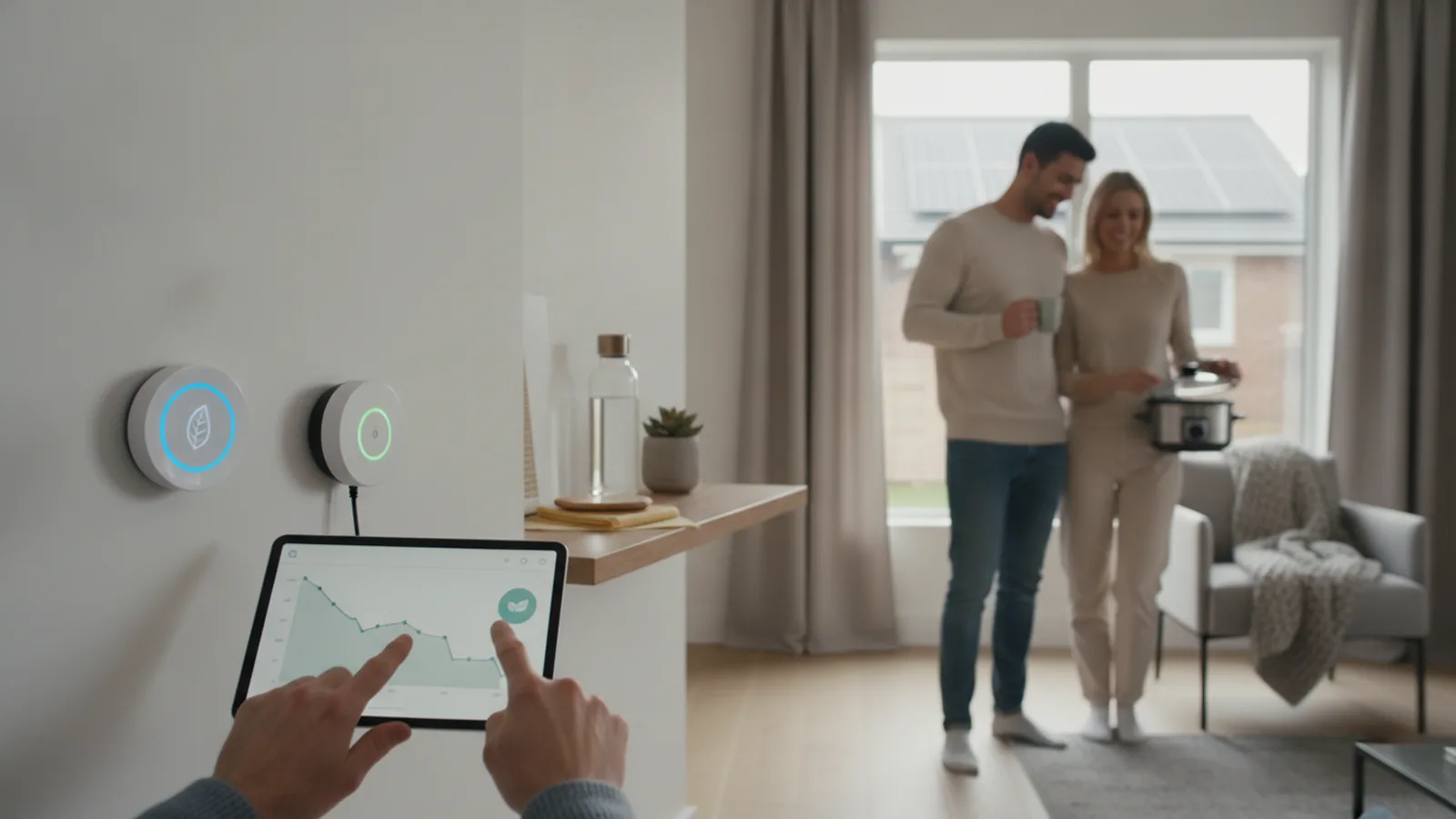
If you have a smart meter, its In-Home Display (IHD) is your most powerful tool. Place it somewhere visible, like the kitchen counter. Watch how the display changes when you turn on high-power appliances like the kettle, electric shower, or tumble dryer. This real-time feedback makes the invisible cost of energy visible, helping you pinpoint exactly where your money is going. Use your online account to look at daily or even half-hourly usage graphs to identify patterns, such as high overnight consumption which could indicate appliances left on standby.
Tame Your Thermostat and Heating
Heating accounts for over half of the average UK household's energy bill, making it the single biggest area for potential savings. The simplest change is to turn down your main room thermostat. The Energy Saving Trust suggests that turning it down by just 1°C could save a typical home over £100 per year. Try setting it to the lowest comfortable temperature, typically between 18°C and 21°C.
Make use of your heating controls. If you have a programmer, set the heating to turn off 30 minutes before you leave the house and come on 30 minutes before you get home. Use Thermostatic Radiator Valves (TRVs) to control the temperature in individual rooms. Turn them down or off completely in rooms you aren't using. Finally, check your boiler's flow temperature. For modern condensing boilers, reducing the flow temperature (the temperature of the water sent to your radiators) to around 60°C can make it run more efficiently without making your home cold. Check your boiler's manual for instructions on how to adjust this.
Find and Seal Draughts
Paying to heat your home only to let that warm air escape through gaps and cracks is a major source of energy waste. Draught-proofing is one of the cheapest and most effective ways to save energy. To find draughts, wait for a cool, windy day. Close all doors and windows and carefully move a lit incense stick or the back of your hand around window frames, skirting boards, letterboxes, and external doors. Where the smoke wavers or you feel a cool breeze, you have a draught.
Use self-adhesive foam strips to seal gaps around window frames and loft hatches. Fit a brush strip to the bottom of external doors and a purpose-made letterbox flap or brush. For gaps between floorboards and skirting boards, use a flexible silicone sealant. An unused chimney is a huge source of heat loss; you can fit a chimney balloon or cap to block the flue, but remember to remove it before lighting a fire.
Optimise Your Hot Water Usage
Heating water is the second-biggest contributor to most energy bills. First, check the thermostat on your hot water cylinder. It should be set to 60°C. This is hot enough to kill harmful bacteria like legionella but not so hot that it's wasteful or poses a scalding risk. Any higher is just wasted energy.
Next, ensure your hot water tank has a well-fitting jacket, at least 80mm thick. Insulating the tank and the first metre of hot water pipes coming from it can save you tens of pounds a year. In the bathroom, try cutting just one minute off your daily shower. A family of four could save a significant amount annually on both energy and water bills by doing this. Finally, always fix dripping hot taps immediately—that’s literally money dripping down the drain.
Switch to Energy-Efficient Lighting
Lighting makes up a smaller but still significant portion of your electricity bill. If you still have old incandescent or halogen bulbs, switching to modern Light Emitting Diodes (LEDs) is a must. While they cost a little more to buy, they use up to 90% less electricity and last up to 25 times longer.
When buying LEDs, look at the 'lumens' (brightness) rather than 'watts' (power consumption). A 10-watt LED can produce the same amount of light as a 60-watt incandescent bulb. Replacing all the bulbs in your home could save you £40-£60 a year on your bills. The most important change, however, costs nothing: get into the habit of turning lights off every time you leave a room.
Master Your 'Wet and Hot' Appliances
Kitchen and laundry appliances are major energy consumers. The key is to use them less, and more efficiently. For your washing machine, always wash a full load and switch from a 40°C cycle to a 30°C cycle. Modern detergents are highly effective at lower temperatures, and this change can cut the machine's energy use in half.
Avoid using a tumble dryer whenever possible; they are one of the most expensive appliances to run. Dry clothes outside on a line or on an indoor airer. If you must use a dryer, use the auto-sensor setting so it stops as soon as the clothes are dry. For dishwashers, always run a full load and use the 'eco' setting. These simple habit changes can add up to substantial savings over a year.
Unplug Standby 'Vampire' Devices
Many modern electronics never truly switch off. Instead, they sit in standby mode, drawing a small but constant amount of power. This is often called "phantom load" or "vampire power." Individually, the cost is tiny, but collectively, it can cost the average household £50-£90 per year.
The main culprits are TVs, satellite boxes, games consoles, microwaves, and phone chargers left plugged in after the phone is charged. Get into the habit of turning these devices off at the wall socket when you're not using them. An easy way to manage this is to plug clusters of devices (like your TV, soundbar, and games console) into a single extension lead that you can switch off with one flick.
Check Your Insulation
While draught-proofing plugs the gaps, insulation reduces heat loss through the fabric of the building itself. If your home has an accessible loft, this is a great place to start. The recommended depth for mineral wool loft insulation is 270mm (about 11 inches). If you only have the 100mm layer that was common in older homes, topping it up is a straightforward DIY job that can save you hundreds of pounds a year on heating.
If your home was built between the 1920s and 1990s, it likely has cavity walls. If these haven't been insulated, you could be losing a third of your heat through them. Cavity wall insulation is not a DIY job—it must be done by a professional installer—but the payback period is often just a few years. Check for local authority schemes or government grants which may help cover the cost.
Quick Reference
| Situation | Use This | Why |
|---|---|---|
| Feeling a cold draught by a door | A foam strip or brush excluder | Stops heated air escaping and cold air entering. It's the cheapest way to feel warmer. |
| Washing everyday clothes | 30°C cycle and a full load | Heating water is the most energy-intensive part of a wash; lower temps save significantly. |
| Leaving the room for more than 5 minutes | Turn off the lights | A simple, zero-cost habit that directly reduces your electricity bill. |
| An unused room feels too warm | Turn down its Thermostatic Radiator Valve (TRV) | It prevents wasting energy by heating spaces that are not in use. |
| Boiling water for one cup of tea | Only fill the kettle with the water you need | Kettles use a lot of power; boiling excess water is a direct waste of electricity. |
Common Problems When You Reduce Home Energy Bills
My bills are still high after making changes.
This can be frustrating, but there are a few common reasons. Firstly, energy prices themselves can rise due to changes in the Ofgem price cap, which can mask the savings from your reduced consumption. Check your bill to see if your kWh usage has gone down. Secondly, it can take a full billing cycle (a month or a quarter) for the changes to become apparent. Finally, if you've done all the small things and your bills are still very high, it may point to a larger underlying issue like very poor insulation, an old inefficient boiler, or faulty appliances, which might require professional investigation.
My family or housemates aren't following the new rules.
Changing habits is a team effort. The key is communication, not conflict. Explain the financial and environmental reasons for the changes. The smart meter's In-Home Display can be a great tool here—show them the real-time cost of leaving a games console on or using the tumble dryer. Make it a shared goal, perhaps agreeing to put the money saved towards something everyone can enjoy. Forgetting is human, so use sticky notes near light switches or plugs as gentle reminders.
I've draught-proofed, but now I have condensation on my windows.
This is a sign that you've sealed your home up well, but now you need to manage ventilation. Draught-proofing is about stopping uncontrolled air leaks. A home still needs controlled ventilation to let moist air out. Activities like cooking, showering, and even breathing produce moisture. To prevent condensation and damp, make sure you use extractor fans in kitchens and bathrooms, open window trickle vents, and air out rooms for 10-15 minutes each day, especially in the morning.
Advanced Tips for Reducing Energy Bills
Once you've mastered the basics, you can explore more advanced strategies to cut your bills even further.
- Thermal Curtains and Blinds: Invest in heavy, thermal-lined curtains for all windows. Closing them at dusk acts as an extra layer of insulation, trapping heat inside. In the summer, closing them during the day can help keep your home cool without needing a fan.
- Smart Home Technology: A smart thermostat learns your routine and can be controlled from your phone, ensuring you only heat your home when you need to. Smart plugs can be scheduled to automatically turn off vampire devices overnight, and smart TRVs allow you to create custom heating schedules for every single room.
- DIY Radiator Reflectors: For radiators on external walls, you can slide specially designed foil panels behind them. These panels reflect heat from the back of the radiator back into the room, rather than letting it be absorbed by the cold wall.
- Long-Term Investments: For homeowners, the next steps are larger investments like upgrading to modern double or triple glazing, installing solar panels to generate your own electricity, or replacing an old G-rated boiler with a new A-rated condensing model. Always check for government grants like the Boiler Upgrade Scheme to help with the costs.
How To Reduce Home Energy Bills FAQ
How much money can I realistically save?
The amount varies depending on your home's size, its current energy efficiency, and your lifestyle. However, the savings are significant. By implementing just a few of the measures in this guide, a typical UK household can easily save several hundred pounds a year. For the most up-to-date figures on potential savings for specific actions, consult the website of the Energy Saving Trust.
Is it worth switching energy supplier?
The energy market has been volatile, but it is always worth checking if you can get a better deal. If your fixed-term contract has ended, you will be moved to your supplier's standard variable tariff, which is often more expensive. Use an Ofgem-accredited price comparison website every few months to compare tariffs and see if a switch could save you money.
I'm renting. What are my options?
Renters can still take many powerful actions. Everything from changing lightbulbs and appliance habits to using temporary draught-proofing is within your control. For bigger issues like an inefficient boiler or poor insulation, you should speak to your landlord. Landlords in England and Wales have a legal obligation to ensure their properties meet a minimum Energy Performance Certificate (EPC) rating of E. You can check your property's EPC rating online for free.
Final Checklist for Reducing Home Energy Bills
Use this checklist to track your progress and ensure you've covered the most important actions for a more energy-efficient home.
- Understood your latest energy bill and identified your main areas of consumption.
- Turned your main thermostat down to the lowest comfortable temperature (18-21°C).
- Set heating timers to match your daily routine.
- Walked through your home and sealed draughts around windows, doors, and floors.
- Checked that your hot water cylinder is insulated and set to 60°C.
- Replaced most-used halogen or incandescent bulbs with energy-efficient LEDs.
- Adopted a "30°C and full load" habit for your washing machine.
- Switched off standby appliances at the wall socket when not in use.
- Measured your loft insulation to see if it needs a top-up to 270mm.
- Compared your energy tariff on a price comparison site in the last six months.


