Double Glazing Energy Savings Explained Review 2026: Is It Worth It?
A proven, high-impact upgrade for reducing heat loss and cutting energy bills, though the initial investment remains substantial.
The payback period varies significantly based on your old windows, property type, and fluctuating 2026 energy prices.
Quick Summary for Skimmers
Double glazing is one of the most effective energy-saving upgrades for a UK home. It works by trapping a layer of inert gas between two panes of glass, drastically reducing heat transfer. This translates into a warmer home in winter, a cooler one in summer, and lower heating bills year-round. While the upfront cost is significant, the long-term financial savings, combined with major improvements in comfort, noise reduction, and condensation prevention, make it a worthwhile investment for most homeowners with old or single-paned windows.
Pros
- Substantially lowers heating bills
- Creates a warmer, more comfortable home
- Virtually eliminates internal condensation
- Significantly reduces outside noise
- Improves your home's EPC rating
Cons
- High initial installation cost
- Payback period can be many years
- Installation process is disruptive
- Not a DIY-friendly upgrade
Double Glazing Energy Savings Explained: Short Introduction
As UK homeowners navigate the volatile energy market of 2026, finding effective ways to reduce household running costs has moved from a sensible saving strategy to an essential financial priority. Among the myriad of home improvements, upgrading your windows to modern double glazing consistently ranks as one of the most impactful. But with a significant upfront cost, the key question remains: is it truly worth the investment?
This review isn't about a single brand or product, but about the technology of double glazing itself as a home upgrade. We'll break down the real-world energy savings you can expect, the crucial factors that influence your return on investment, and the often-overlooked benefits to your daily comfort and your property's value. Using data from industry bodies and projecting for the 2026 climate, we'll explain the thermal science in simple terms, demystify the costs, and help you decide if new windows are the right eco-home saving for you.
Thermal Performance & Heat Loss Reduction
The primary function of double glazing is to improve the thermal insulation of your windows. A startling amount of your home's heating energy escapes directly through glass. The Energy Saving Trust estimates that in a typical gas-heated, semi-detached UK home, around 18% of total heat loss is through the windows. Single-glazed windows are the worst culprits, offering little more resistance to heat transfer than an open space.
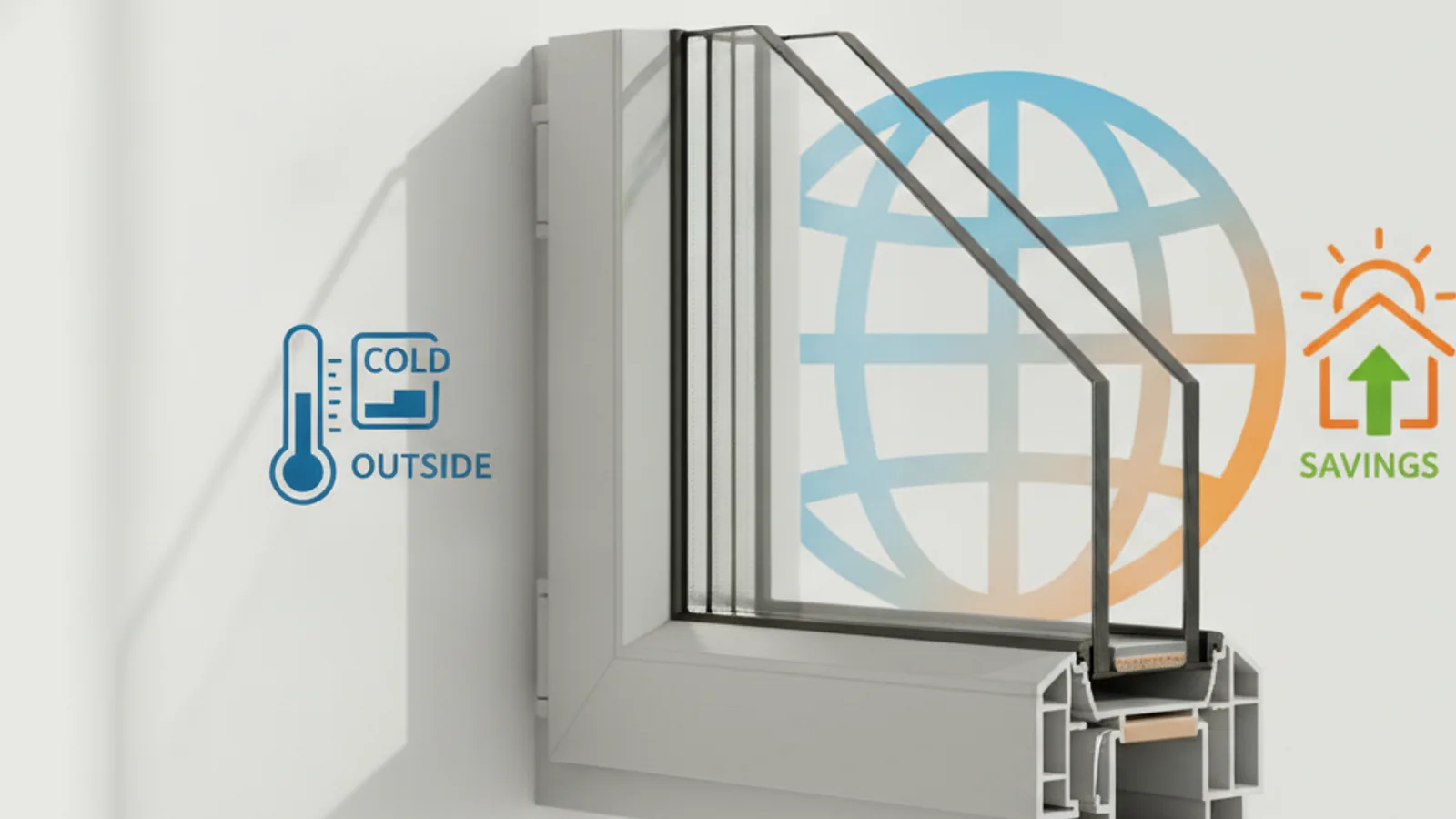
Double glazing combats this by creating a thermal barrier. Two panes of glass are separated by a spacer bar, and the gap is filled with an inert gas like argon, which is a much poorer conductor of heat than air. Modern units also feature a low-emissivity (Low-E) coating, a microscopically thin layer of metal oxide on one of the internal glass surfaces. This coating reflects heat back into the room during winter and reflects the sun's heat away during summer, working year-round to stabilise your home's temperature.
The effectiveness of a window is measured by its U-value, which indicates the rate of heat transfer. The lower the U-value, the better the window's insulating properties. For context:
- Single Glazing: U-value of around 5.0 W/m²K
- Old Double Glazing (pre-2002): U-value of around 3.0 W/m²K
- Modern A-rated Double Glazing: U-value of 1.2 W/m²K or less
As you can see, upgrading from single glazing to new A-rated double glazing can reduce heat loss through your windows by over 75%. This is a fundamental improvement that directly impacts your home's ability to retain heat, meaning your heating system doesn't have to work as hard or as often to maintain a comfortable temperature. For its core scientific purpose, the technology is exceptionally effective.
Heat Loss Reduction Score: 95/100
Energy Bill Savings & Financial ROI
While the thermal science is impressive, the bottom-line question for most is: how much money will I actually save? The answer depends heavily on your starting point and current energy prices. The figures provided by the Energy Saving Trust (EST) are the most reliable industry benchmark, though they are based on typical usage and prices which can fluctuate.
As of early 2026, for a typical gas-heated home, upgrading from single glazing to A++ rated double glazing could save you approximately:
- Detached House: £185 - £210 per year
- Semi-Detached House: £155 - £180 per year
- Mid-Terrace House: £110 - £125 per year
- Bungalow: £100 - £115 per year
These figures represent significant, recurring annual savings. However, they must be weighed against the upfront cost to understand the Return on Investment (ROI) or "payback period". If the total cost to install new windows in a semi-detached house is, for example, £7,500, and the annual saving is £160, the simple payback period would be over 45 years. This calculation is a major reason for hesitation.
However, this simple calculation misses several key factors. Firstly, energy prices are unlikely to remain static; future rises will shorten the payback period. Secondly, the calculation ignores the immediate and substantial non-financial benefits like improved comfort and reduced condensation. Finally, new windows add to the capital value and saleability of your property, an asset gain that isn't captured in the annual bill saving. While the direct financial ROI is a long-term game, the immediate value it adds is undeniable.
Energy Bill Savings Score: 85/100
Upfront Cost & Installation Process
The single biggest barrier to upgrading to double glazing is the cost. It is a major home improvement project, and the price can vary dramatically based on several factors:
- Number and Size of Windows: The most obvious cost driver. A full-house replacement is a significant five-figure investment for many properties.
- Frame Material: uPVC is the most budget-friendly option. Timber frames are more traditional and expensive, while aluminium offers a slim, modern aesthetic at a premium price.
- Style of Window: A simple casement window is cheaper than a more complex sash or bay window.
- Glazing Specification: Opting for enhanced features like acoustic glass for noise reduction or triple glazing will increase the cost.
- Installer: Prices can vary significantly between large national companies and smaller local fitters.
As a rough guide for 2026, you can expect to pay between £600 - £1,200 for a single uPVC casement window, supplied and fitted. For a typical 3-bedroom semi-detached house with 8-10 windows, the total cost could range from £6,000 to £12,000 or more. This is a substantial outlay that requires careful budgeting and, for many, financing.
The installation process itself is inherently disruptive. It involves removing old frames, which can be messy, and fitting new ones. A professional team can typically complete a whole house in 2-5 days, but it means having tradespeople in your home and dealing with noise, dust, and temporary exposure to the elements. It's crucial to choose a reputable, certified installer (look for FENSA or CERTASS accreditation) to ensure the work meets building regulations and is completed to a high standard. Because the cost is high and the payback period is long, this aspect scores lower, reflecting the financial reality for most households.
Upfront Cost & ROI Score: 75/100
Home Comfort, Condensation & Noise Reduction
Beyond the spreadsheets and bill calculations lie the immediate, tangible benefits of double glazing that dramatically improve your quality of life. These are often the deciding factors for homeowners who make the investment.
The most noticeable change is thermal comfort. With single glazing, areas near windows are often cold spots, creating unpleasant draughts and a chilly ambient temperature even when the heating is on. Double glazing eliminates this. It creates a much more even and stable temperature throughout your home, making rooms feel cosier and more usable, especially in winter.
Secondly, double glazing is the most effective solution for tackling internal condensation. When warm, moist indoor air hits a cold, single-paned window, the water vapour condenses, leading to streaming water, puddles on window sills, and eventually black mould. This is not only unsightly but can damage decor and contribute to respiratory problems. Because the inner pane of a double-glazed unit stays much closer to room temperature, condensation is virtually eliminated. This is a huge benefit for home health and maintenance.
Finally, the noise reduction is profound. The combination of two glass panes and the gas-filled cavity acts as a powerful acoustic barrier, dampening external noise from traffic, neighbours, or general street life. For homes on busy roads or in noisy areas, this can be a transformative upgrade, creating a much more peaceful and quiet indoor environment. These combined benefits provide immense daily value that pure financial metrics cannot capture.
Home Comfort & Health Score: 92/100
Durability, Maintenance & Lifespan
Double glazing is a long-term investment, so its durability and lifespan are critical considerations. Modern double-glazed units are robust and designed to last. The sealed units themselves are typically guaranteed for 10-20 years against failure (i.e., the seal breaking and moisture getting inside), but a well-made unit can easily last 25-35 years or more.
The frame material plays a big role in maintenance. uPVC frames are the most popular choice in the UK precisely because they are extremely low-maintenance. They do not rot, rust, or flake and only require occasional cleaning with soap and water to keep them looking their best. They are exceptionally durable in the UK's wet climate.
Timber frames require more upkeep. They need to be periodically repainted or stained every 5-8 years to protect the wood from the elements and prevent rot. While many appreciate their aesthetic appeal, buyers must be prepared for this ongoing maintenance commitment.
Aluminium frames are also very low-maintenance, with a durable powder-coated finish that resists weathering. The moving parts of the window, such as hinges and locks, will also require occasional lubrication, regardless of frame material.
The most common failure is a "blown" or "failed" unit, where the seal between the two panes breaks. This allows moist air to enter the cavity, causing a foggy or misted appearance you can't clean off. While this means the unit has lost its insulating gas and is less effective, it's important to note that you typically only need to replace the glass unit itself, not the entire window frame, making it a much cheaper fix. Overall, double glazing is a fit-and-forget improvement for decades.
Durability & Maintenance Score: 90/100
Who Is Double Glazing For?
Double glazing is a wise investment for a wide range of homeowners, but its urgency and benefits profile vary depending on the situation.
| Buyer Profile | Primary Goal | Fit | Reasoning |
|---|---|---|---|
| Homeowner with Single Glazing | Reduce bills & improve comfort | Excellent | This group will see the most dramatic improvement in both energy savings and quality of life. It's a transformative upgrade. |
| Homeowner with Old Double Glazing | Improve efficiency & fix issues | Good | Upgrading from 20+ year old double glazing will still yield significant efficiency gains and fix problems like failed seals or draughty frames. |
| The Renovator | Improve property value & EPC | Excellent | New windows are a major selling point, improve kerb appeal, and are essential for achieving a high Energy Performance Certificate (EPC) rating. |
| The Landlord | Meet regulations & attract tenants | Good | With increasing minimum energy efficiency standards for rental properties, upgrading may be a necessity. It also makes a property more attractive to tenants. |
| The Eco-Conscious Homeowner | Reduce carbon footprint | Excellent | Directly reduces the amount of energy (and therefore fossil fuels) needed to heat the home, leading to a tangible reduction in household carbon emissions. |
How We Reviewed Double Glazing Energy Savings
This review is not based on a hands-on installation in a single test property, as the performance of double glazing is a well-established building science. Instead, our analysis is compiled from extensive research into publicly available data from authoritative UK sources, including the Energy Saving Trust (EST), government guidance on building regulations (Part L), and analysis of industry pricing trends for 2026.
We have synthesized this information and combined it with our editorial expertise in home energy efficiency. Our scoring reflects a balanced view of the technology's thermal performance, its real-world financial implications for UK households, and the significant non-financial benefits. We've also factored in common patterns from homeowner feedback regarding costs, installation experiences, and long-term satisfaction to provide a realistic and practical overview for anyone considering this upgrade.
Final Verdict on double glazing energy savings explained
In the landscape of UK home energy savings for 2026, upgrading to modern double glazing remains one of the most reliable and impactful investments you can make. The evidence is clear: it drastically reduces heat loss, leading to lower energy bills and a significantly smaller carbon footprint. The immediate, day-to-day benefits—a warmer home, no condensation, and a quieter life—are arguably as valuable as the long-term financial returns.
The significant upfront cost is, and will remain, the primary obstacle. A payback period measured in decades can be difficult to justify on pure financial metrics alone. However, viewing double glazing solely through this lens is a mistake. It is a fundamental upgrade to the fabric of your building, an investment in your daily comfort, your family's health, and the future value of your property.
For any homeowner with single glazing or old, inefficient double glazing, the question is less "if" and more "when". If you plan to stay in your property for the medium to long term, double glazing is an unequivocally smart choice that pays dividends in comfort from day one and in savings for years to come.
Compare Certified Double Glazing Quotes


