Compost Bin Buying Guide
Choosing the right compost bin can feel complicated, but this guide makes it simple. We walk you through assessing your space, understanding different bin types, and asking the right questions before you buy. Following these steps will help you confidently select a compost bin that fits your home, garden, and lifestyle, turning your kitchen scraps and garden cuttings into nutrient-rich soil improver. This saves you money on commercial compost and significantly reduces your household waste, a win for your wallet and the planet.
Fast Answer
- Space Available: Determines bin size. A small patio needs a tumbler or wormery; a large garden can house a multi-bay wooden system.
- Waste Type: Raw fruit and veg scraps are fine for basic bins. Cooked food, meat, and dairy require a sealed hot composter or Bokashi bin.
- Speed Required: Static bins take 6-12 months. Tumblers and hot composters can produce compost in as little as 1-3 months.
- Your Budget: Council-subsidised plastic bins are the cheapest. Hot composters are a significant investment with faster, more versatile results.
Before You Start
Preparation is key to avoiding buyer's remorse. Before you start browsing, gather this essential information to ensure you make the right choice first time.
- Measure your space: Use a tape measure to find the exact footprint available for your bin. Remember to leave room around it for access.
- Estimate your waste: For one week, track how much compostable waste your household produces. This includes fruit and veg peelings, coffee grounds, eggshells, and garden clippings. This will help you choose the right capacity.
- Check for subsidies: Many UK councils offer compost bins at a heavily discounted price. Search online for "[Your Council Name] compost bin scheme" to see what's available.
- Decide on waste types: Be clear about whether you want to compost only raw plant matter or all food waste, including cooked leftovers, meat, and dairy. This is the most important factor in determining the type of bin you need.
- Set a budget: Decide how much you're willing to invest. Prices can range from under £30 for a subsidised basic bin to over £200 for an advanced hot composting system.
Step-by-Step Instructions
Assess Your Space and Waste Volume
Your first step is to match the compost bin to your physical environment. A bin that’s too large for your space is impractical, while one that’s too small will quickly overflow and become a source of frustration. Start by measuring the patch of garden, yard, or balcony you have designated for composting.
Next, consider your waste output. A single person or couple with a small garden might only need a 220-litre bin. A family of four with a medium-sized garden will likely need a bin of 300 litres or more. If you produce a lot of grass clippings or hedge trimmings, you may even want to consider a two-bin system. The goal is to have enough capacity to keep adding fresh material while the older material at the bottom has time to break down.
Choose Your Compost Bin Type
This is the most crucial decision. The type of bin dictates what you can compost, how quickly you'll get results, and how much effort is required. Here are the main options available in the UK:
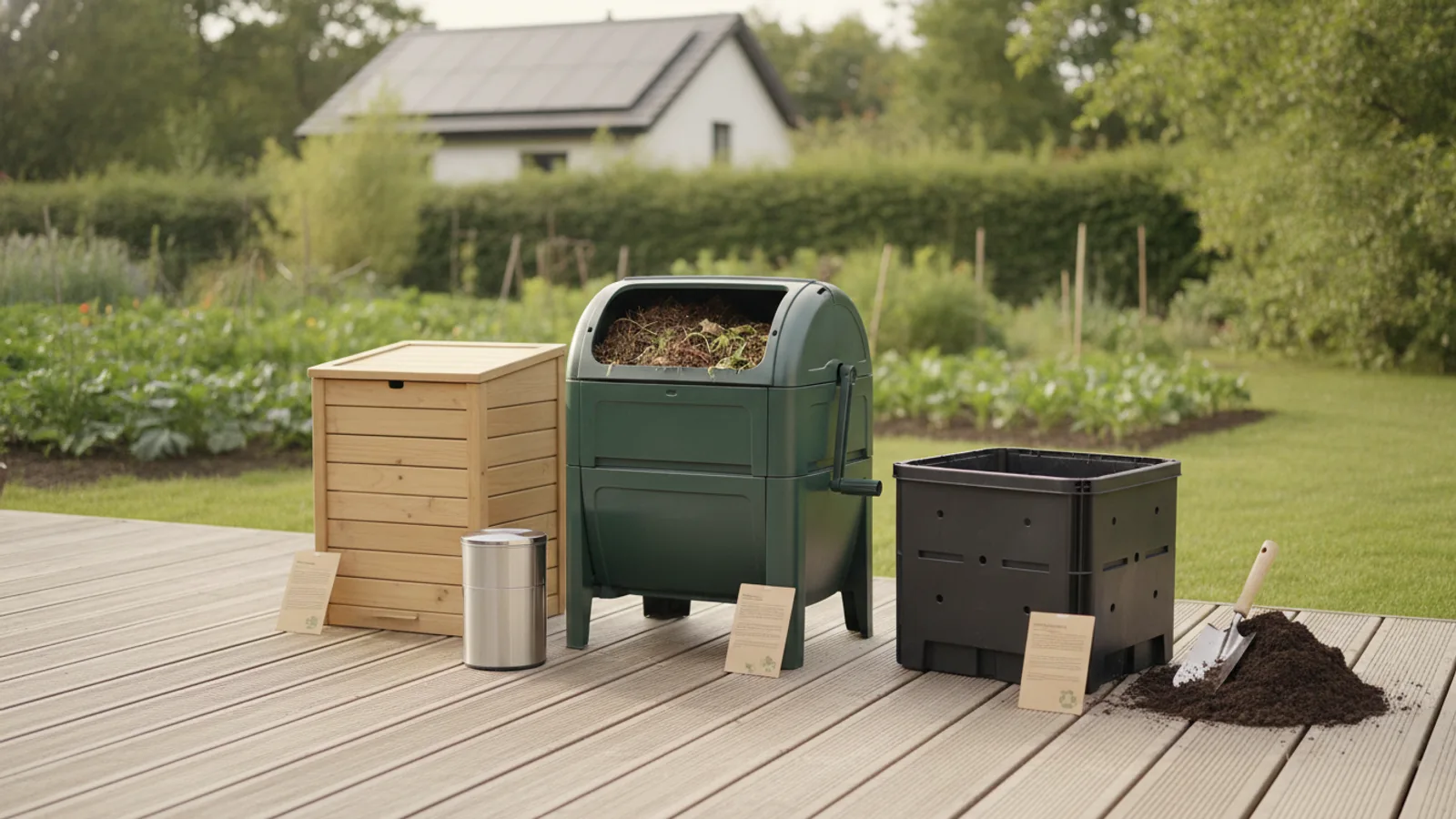
- Plastic Static Bins: Often called 'Dalek' bins, these are the most common and affordable type, frequently offered through council schemes. They are ideal for garden waste and uncooked kitchen scraps. Pros: Cheap, durable, and low-maintenance. Cons: Composting is slow (6-12 months), and turning the contents can be difficult.
- Wooden Bins: These are typically open-slatted boxes (like the 'New Zealand Box' design) that offer excellent aeration. They are perfect for those with large gardens producing significant amounts of green waste. Pros: Large capacity, easy to access and turn. Cons: Can be open to pests and the wood may degrade over time.
- Tumbling Composters: These are sealed drums mounted on an axle, allowing you to easily mix the contents by turning a handle. This aeration speeds up the process significantly. Pros: Fast results (2-4 months), sealed from pests, less physical effort. Cons: Smaller capacity for the price, more expensive than static bins.
- Hot Composters: These are insulated, sealed bins designed to reach high temperatures (55-65°C). This allows them to break down all food waste, including meat, fish, dairy, and cooked leftovers, safely and without odours. Pros: Very fast (1-3 months), kills weed seeds and pathogens. Cons: The most expensive option, requires a careful balance of 'green' and 'brown' materials.
- Bokashi Bins: An indoor system for all kitchen waste. You layer food scraps with a special bran mix in a small, airtight caddy. It ferments (or 'pickles') the waste rather than decomposing it. Pros: No smells, handles all food types, suitable for flats. Cons: The end product is a 'pre-compost' that must be buried in soil or added to a conventional compost bin to fully break down.
- Wormeries: A compact system using special worms to break down kitchen scraps. Pros: Produces incredibly rich compost ('vermicompost') and a liquid fertiliser. Cons: Can't handle large volumes or acidic/oily foods, sensitive to extreme temperatures.
Consider Key Features and Materials
Once you've narrowed down the type, look at the specific features of different models. For any outdoor bin, good aeration is non-negotiable. Look for adjustable vents, slats, or a design that promotes airflow to prevent the pile from becoming a slimy, smelly mess.
Access is another critical feature. A secure, easy-to-open lid is essential for adding materials and keeping rain and pests out. Crucially, check for a retrieval hatch at the bottom. This allows you to harvest the finished compost from the base without having to empty the entire bin.
Material choice matters too. Most plastic bins are now made from 100% recycled plastic, which is a great sustainable option. If you prefer a wooden bin, look for one made from FSC-certified timber to ensure it comes from a responsibly managed forest. For hot composters, the quality of the insulation (usually expanded polypropylene) is the most important factor in its performance.
Factor in Your Budget and Long-Term Value
Compost bins are an investment that pays you back over time by providing free, high-quality soil conditioner. However, the initial outlay varies significantly.
A council-subsidised plastic bin might cost you as little as £20-£40. A good quality tumbler will typically be in the £80-£150 range. High-performance hot composters start around £150 and can go up to £300 or more. While the upfront cost of a hot composter is high, its ability to handle all food waste could eliminate your need for a council food waste collection service and means you'll never need to buy bags of commercial compost again, offering significant long-term savings.
Check Local Council Subsidies and Offers
Before you click 'buy' on any retail website, perform one vital check. Many local authorities in the UK have partnerships with suppliers to promote home composting. These schemes offer new, perfectly good compost bins and accessories at a fraction of their retail price.
Go to your preferred search engine and type in the name of your local council followed by "compost bin". This will usually lead you to a page on your council's website or direct you to a partner site like GetComposting.com. Simply enter your postcode to see the specific deals available in your area. This is the single easiest way to save money on your purchase and is a benefit you shouldn't overlook.
Plan Your "Greens" and "Browns" Supply
A successful compost pile requires a balanced diet of nitrogen-rich "greens" and carbon-rich "browns". Your choice of bin should align with the materials you have readily available.
- Greens (Nitrogen): These are wet, fresh materials like grass clippings, fruit and vegetable scraps, coffee grounds, and green plant cuttings.
- Browns (Carbon): These are dry, woody materials like cardboard, scrunched-up paper, egg boxes, twigs, and dry autumn leaves.
If your household produces a lot of kitchen scraps (greens) but you have little garden waste or cardboard packaging (browns), your compost could become wet and smelly. Conversely, too many browns will make the pile very slow to decompose. Before you commit to a bin, think about how you will maintain a healthy balance. If you know you'll be short on browns, a smaller bin might be more manageable, and you can start saving all your toilet roll tubes and cereal boxes immediately.
Quick Reference
| Situation | Use this | Why |
|---|---|---|
| "I live in a flat with no garden." | Bokashi Bin or Wormery | Compact, indoor-friendly, and specifically designed for kitchen scraps. |
| "I have a small garden and mainly vegetable peelings." | Plastic Static Bin or Tumbler | Cost-effective and perfectly suited for uncooked plant waste and modest volumes. |
| "I have a large garden with lots of grass and hedge clippings." | Large Wooden Bin (or multiple) | Handles high volumes of garden waste and allows for excellent aeration to speed up decomposition. |
| "I want to compost EVERYTHING (including meat/dairy) and get compost quickly." | Hot Composter | Sealed system reaches high temperatures to break down all food waste safely and rapidly. |
Common Problems When You Buy a Compost Bin
A little foresight can help you avoid the most common pitfalls that new composters face. Here are some frequent mistakes and how to steer clear of them.
- Buying Too Small: This is the number one error. You fill the bin to the top, but the material needs months to break down, leaving you with nowhere to put your fresh scraps. Solution: When in doubt, buy the next size up. It's better to have extra space than not enough.
- Mismatching the Bin to Your Waste: Putting cooked food into a standard plastic bin is a recipe for attracting rats and creating foul odours. Solution: Be honest about what you want to compost. If it includes anything from your dinner plate, you must choose a fully sealed hot composter or a Bokashi system.
- Forgetting About Practical Access: It's easy to tuck a bin into a tight corner, only to realise you can't open the bottom hatch to get your finished compost out. Solution: Before you buy, visualise yourself using the bin. Ensure you have enough space to lift the lid fully and comfortably use a spade or fork at the base.
- Paying Full Price Unnecessarily: Many people purchase a bin from a garden centre without realising they could have gotten the exact same model for half the price. Solution: Always perform the 5-minute council subsidy check online before you buy from a retailer.
Advanced Tips for Your Compost Bin Purchase
Ready to take your composting to the next level? These advanced considerations can help you create a highly efficient system.
- Consider a Multi-Bin System: For serious gardeners, a single bin is often not enough. A three-bay wooden system is the gold standard: one bay for filling with fresh material, a second for the compost to mature or 'cook', and a third holding finished compost ready for use. This creates a continuous, efficient cycle.
- Look for Liquid Fertiliser Taps: Many wormeries and some Bokashi bins are designed with a tap at the bottom. This allows you to easily drain off the nutrient-rich liquid leachate, which can be diluted with water to make a fantastic free liquid fertiliser for houseplants and garden vegetables.
- Think About Aesthetics: If your bin will be in a highly visible location, its appearance might matter. While the standard black plastic bin is purely functional, there are more attractive options available, such as beehive-shaped wooden composters or sleek, modern tumblers that look less utilitarian.
- Explore DIY Options: If you have a large garden and are on a tight budget, consider building your own compost bay. Using reclaimed wooden pallets is a popular, low-cost method for creating a large, effective composting area.
Compost Bin Buying Guide FAQ
What size compost bin do I need?
For a household of 1-2 people with a small garden, a 200-300 litre bin is usually sufficient. For a family of four or those with a medium to large garden, look for a capacity of 300 litres or more. If you generate a lot of grass clippings, a larger or second bin is recommended.
Can I put cooked food in any compost bin?
No. Cooked food, meat, fish, cheese, and bread should only be placed in a fully sealed hot composting system or a Bokashi bin. These systems are designed to process this type of waste hygienically without attracting pests or creating bad smells.
Where is the best place to put a compost bin?
The ideal location is a level, well-drained spot directly on soil or grass. This allows beneficial organisms to enter the bin from the ground. Partial sun is fine, but avoid deep shade (too cold and damp) or scorching, all-day sun (can dry the contents out).
Do compost bins smell?
A healthy, well-managed compost bin should not smell bad. It should have a pleasant, earthy scent, like a forest floor. If your bin smells rotten or sour, it's a sign that the balance is wrong—usually, it contains too much wet 'green' material and not enough dry 'brown' material.
How long does it take to get usable compost?
This depends entirely on the type of bin and the materials you add. A hot composter can produce finished compost in 1-3 months. A tumbler takes around 2-4 months. A standard static plastic bin is the slowest method, taking anywhere from 6 to 12 months.
Final Checklist for Buying a Compost Bin
You're ready to make your choice. Run through this final checklist to ensure you've covered all the bases for a successful purchase.
- I have measured my available garden or balcony space.
- I have a clear idea of my household's weekly waste volume.
- I have decided which types of waste I will be composting (e.g., garden and veg peelings only, or all food waste).
- I have researched the different bin types and selected one that matches my space, waste, and desired speed.
- I have checked my local council's website for subsidised bin offers.
- I have planned a specific location for the bin that allows for good access and drainage.
- I have a plan for sourcing enough 'brown' materials to balance my 'green' waste.


